Community Health Improvement Plan
What is the Community Health Improvement Plan?
For a full understanding of where the Community Health Improvement Plan starts, we recommend reading the Community Health Assessment (CHA) page first.
A community health improvement plan (CHIP) is developed by and for the community to address key health issues and social determinants of health that are identified by the community as priorities. The CHIP cycle goes hand in hand with the CHA process and as such, is redone every 3-5 years.
The CHIP is made up of 2-4 health priorities that are identified by the community, but it doesn’t stop there. For each priority, the community and partner organizations identify goals, strategies, actions, and timelines that are the basis for the plan. For instance, if a selected health priority was to increase healthy eating, Yellowhawk might work with public schools to set a goal for healthy food in vending machines and within the school cafeteria. The organizations that agree to be a part of the CHIP then track their progress on the goals, and monitor and report on how the goals are progressing.
Want to learn more? Check out the document here:
CHIP Health Priorities
A new CHIP is available for viewing and is based on the data from the 2021 CHA. In response to the community feedback we received, the following three health priorities were selected:
- Physical Activity & Nutrition
- Behavioral Health
- Community Engagement
Goals, objectives, and strategies were made to address each of these health priorities. For the full plan, please view the CHIP here. Below we have included the objectives under each priority for an overview of what we hope to achieve.
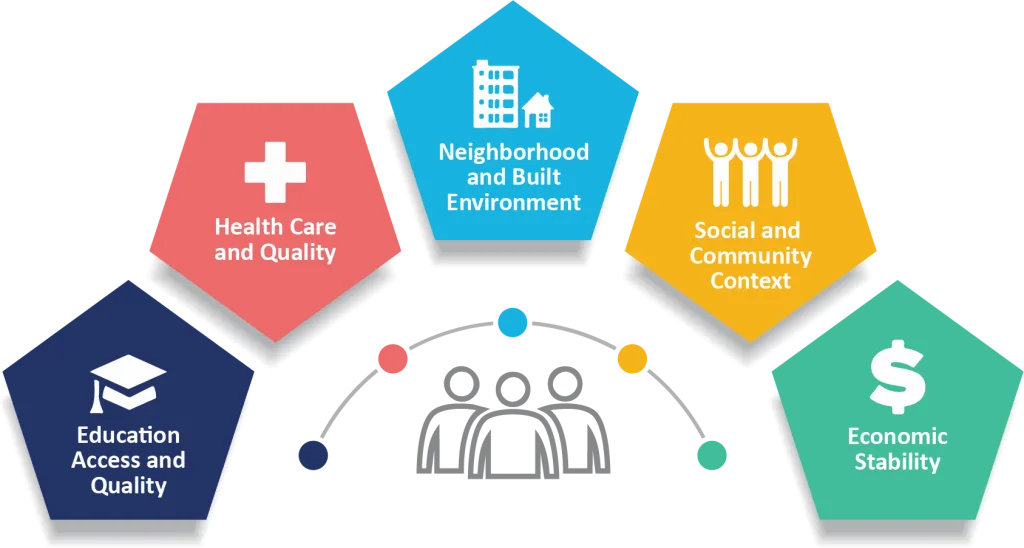
The CDC states that “social determinants of health (SDOH) … are the conditions in which people are born, grow, work, live, and age, and the wider set of forces and systems shaping the conditions of daily life.” The process of community health improvement planning is to work within the community to make changes to the systems that affect our health, as well as our individual behaviors.
The CHIP is not something Yellowhawk alone can accomplish. Though we steward the process, we rely on our community partners and community members to work with us in our efforts to improve.
If you have direct questions or would like more information about this process, please contact the Public Health Accreditation and Grant Coordinator, Chelsea Hallam, by phone at 541.240.8429 or through email at chelseahallam@yellowhawk.org.
CHIP Health Priorities
A new CHIP is available for viewing and is based on the data from the 2021 CHA. In response to the community feedback we received, the following three health priorities were selected:
Physical Activity & Nutrition
- By the end of 2027, increase the number of individuals who are physically active at least 150 minutes a week from 15.1% to 25%.
- Install 8 video cameras and security equipment in Tribal housing neighborhoods to increase safety.
- Continue planning efforts to construct a Community Wellness Center.
- By the end of 2027, increase the fruit consumption in individuals aged 2 years and over from 0.51 cups to 0.56 cups.
- By the end of 2027, increase the vegetable consumption in individuals aged 2 years and over from 0.76 cups to 0.84 cups.
- Assess and increase the community’s knowledge and exposure to First Foods.
Behavioral Health
- Yellowhawk staff will complete/attend a minimum of two culturally appropriate or trauma-informed trainings per calendar year.
- Reduce barriers to mental health care by reducing wait lists and/or out of agency referrals by 50% by the end of 2027.
- Implement a training program related to decreasing stigma/increasing awareness related to behavioral health disorders and gender affirming care for Yellowhawk staff and identified community partners.
- By 2027, increase the proportion of primary care visits where adolescents and adults are screened for depression from 37.5% to 49.5%.
- Reduce barriers to substance use disorder care by increasing awareness and breaking down stigma to receive treatment.
- Decrease in number of active clients who are diagnosed with Alcohol Abuse/Alcohol Dependence by at least 10% compared to 2023 numbers.
- Reduce the rate of individuals who use commercial tobacco products from 18% to 13% by the end of 2027.
- Assess, inventory, and increase the number of opportunities for community members to receive technical, career, or skills-based trainings.
Community Engagement
- By 2027, create and implement a community-wide educational campaign centered on social drivers of health including a community-led resolution addressing the health-related social needs (HRSN) of the community.
- Create two digital media campaign(s) each year promoting patient centered, strength-based, trauma-informed and culturally grounded services offered at Yellowhawk.
- Provide opportunities for relationship building within the Tribal community by ongoing collaboration between Yellowhawk, Tribal, and community organizations at least once a month.
Thank you for your feedback and support to guide and shape this plan.
For more information about CHIPs in general or SDOH, please visit the following CDC information pages: